Hey guys!! Enjoying fall? The crisp air, the crunchy leaves, there's no season like it right? Well I'm enjoying 100% humidity and sweltering heat of the end of the rainy season, which is charmingly timed with Ramadan, the Muslim month of fasting- no eating or drinking from sun up to sun down. So bad moods, low energy and lots of colds and malaria do their part to make this month... not that exciting. Anyway... here's some excerts from an email I just sent my sister that tells a little about what I'm up to now that I'm officialy in my second year of volunteering!
"Well... life here is good... it's a little hard in ways but so amazing in others. I'm never able to be as productive as I want to be, but am also learning to just "be here now" and watch bugs and kids. But I'm always wanting to make the most of my time here... but you know, there are language barriers and cultural barriers ect.. and it's just hard to make anything happen. Last dry season Jamagen (my village) planted a tree nusrsery and that has been my main project I guess... getting those outplanted and working with the village every sunday to put up a fence, tend the field, ect. and it's been as awesome success. Then, I worked with the forestry dept. and others on tree nurseries in schools, as part of that "All-School Tree Nursery Comp" I always talk about, and that was a minor success but had a lot of problems, oh. so many hang ups! Things are sooo un organized here and gambians have a different way of thinking and communicating.... not that we don't get along but working together... sometimes its just a halarious mess. Next, I wrote a proposal to get a few thousand American dollars to do a small project in 6 villages starting soon, with the end of the rains. I haven't heard back yet about the funding. but the project is.. yep, tree nurseries! But this time, not mangos or fruit trees at all, but only fuel wood trees. The Gambia's beautiful forests are all but gone and it's so heartbreaking... most of it is from women collecting firewood. The funds would actually pay villagers for each successful tree they plant... it's based on the Green Belt Project in Kenya which was really successful. If I get that going then I will be so happy... trees, I really love them! The giant baobobs, silk cottons and mahoghanys- they remind me of dinosaurs, they seem like they could seriously just up root and start roaming around, like in the Lord of the Rings. They are magestic. I'm also encouraging the youth group of Jamagen to harvest honey and sell that, and get that organized. That's going well. Last thing, I'm a little nervous I guess and so am dragging my feet on this project, but I want to have kind of a kid's club in Jamagen. Something that mixes environmental ed, arts and crafts, fishing and other sweet skills, and yeah i guess teaching a little English too... I hesitate to teach English and might instead teach reading and writing in Woolof. I hate that assimilation thing, it's what I hate about development work. I know English is good to know and all that, but gosh it just goes against something in me... to come and spread the great Western gospel. So maybe if certain people kids who already go to school want to be tutored in English, then I can do that. But I'm hesitating to start because I don't want to start something I can't finish, don't want to be in over my head. But I'm bout to just jump in.
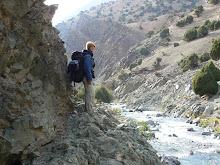
Speaking of jumping in! I have a new site mate, her name is Philipa and she lives about 3 k away in the same village as Elgn, my other site mate (both teachers)... she's rad, it's so fun to have another girl near by. Well, my story about jumping in goes... it's sweltering hot one Sunday, during Ramadan. Everyone is just laying around fanning themselves. The three of us snapped and decided to break the PC law about not swimming in the river (this is off the record). We bought a watermelon, the first of the season and some cookies and took our bikes to the river. We met 4 small boys doubled up atop some donkeys and they too were going for a dip, so they showed us the way and assured there were no hippos here, only fish. They lead us through some mangrove areas to a nice deep spot and entertained us for the afternoon. Anyway, it was much fun just floating the the brown mostly warm water... reminded me of my days in east Texas lakes. We're schemeing now to build a raft, since there are no skiing boats around. It's nice to go be away from people in nature, you feel almost not in The Gambia. The palm forests all around, the beautiful birds... the cows."
Anyway hope everyone is enjoying. I'm going to Morrocco at the end of October... SOOO excited!
Tuesday, October 02, 2007


Friday, August 17, 2007
Tuesday, August 14, 2007

This is the first time I've done this... I'm asking for money for a Gambian cause! Here is the plea: an 11th grade girl needs money to finish school
Here is why you should help: This girl is the most inspiring girl student I've met in the Gambia. Her name is Fatou Dabo, and she is a Fula living in a village near mine. I met her mom first- a skinny energetic Fula women, fiesty and sweet. I ended up giving her mom some soy bean to try and hanging out in their compound for the afternoon.
Fatou came in and greeted me in Woolof and in English and we chatted. I had never before met a young girl in The Gambia who could converse well in English so I suriously asked her about her schooling. It turns out she has been going to school in Kombo, living with an aunt, and just comes home during the rainy season to help farm. School was free for her until 9th grade, and paying the 3,000 dalasi (115 US dollars)a year fee has been hard for her family- of course, because they are subsistance farmers/gardeners. Last year, she began grade 11 but the money ran out and the school had to turn her away. I ask her what she will do now, expecting her to not care one way or another about finishing school... sadly, that is the popular view in the villages. But no! She says she LOVES school, loves reading writing and math, (math? i ask in disbeief) and that she wants to go back and finish. She says proudly that she does well in school. She tells me she goes to her uncle's hut every evening to study (this is summer break for her! and it doesn't look like she'll be going back anyway, and she's studying in the evenings!?) I'm totally taken aback by her un-fashionable attitude- a young girl caring strongly about school is not something I've come across yet here. I've offered to tutor girls in my village but even as they politely agree, I can see that there is no interest. Fatou is 17 she tells me, and her father wants her to leave school and marry. With all the rebellious-ness you'd expect from a teenager but in a wierd reverse way she raises her small voice a little and says "My father tells me to leave the school and marry but I don't want this. I tell him let me finish school." My inner feminist cheerleader is waving pom poms and cheering "You go girl, you go you go!" I resist the urge to cheer and instead encourage her to keep studying on her own.
We sat in her spotless mud hutt and talked all afternoon, and she came to visit me a few days later in Jamagen. The thing that impresses about Fatou is that she loves school in a time and a place where it's not the cool thing to do. She is truly a rariety. She really can read and write- she wrote her name for me and read Newsweeks in my hut... this may sound trivial but the young girls in Jamagen who have finished highschool cannot read, write or speak English. Because it was not important to them, which is not all their fault, it's a problem with really deep roots.
Anyway! Can you help? I'm looking for friends and family who want to support this awesome young lady. It's 1,000 D per semester (US $39) and there's three semesters in a year. She would start the first week of September, grade 11. It's coming up soon! If you can donate any money to sponsor Fatou, let me know. If you're annoyed that I'm soliciting money, I'm really sorry!
stephrayburn@gmail.com
Thursday, July 05, 2007
Summa time and the living... well "it's not easy in The Gambia"
The rainy season is here finally, tho that doesn't mean it's raining hard or everyday. It just means the rain is around, here and there, and the relentless brown and orange is being overtaken by green. Actually the rains are late... usually by early July they have set it regularly and heavily. Still, up-country (east Gambia) looks "like a park" now, covered in grass and even the north bank has gotten enough for the crops to germinate.
So... how are my days flled these days? I often go to near-by Kerewam to work the awesome Department of Forestry guys there... they were my main partners in working on the All School Tree Nursery Competition in the north bank. The competition was not a huge success this year, due to some hang ups at the national level but several school did create great tree nurseries and are planning on outplanting soon. The schools are closing now for the summer but will keep an eye on their trees and outplant as soon as the rains are steady. Now we start planning for next year's competition!
Jamagen and two other villages within 2k are participating in a forestry department initiative to create wood lots... the "PWAMP" project. This keeps the women of Jamagen busy preparing the land and tending their little tree nursery- every Sunday is a work day! I have started to bring a bucket of water with a packet of "jumpkin," a powdered drink mix they sell here at the little bitiks because otherwise they don't drink. Several hours of work in the hot morning sun and they don't drink! But the work days are effective... and halarious. It's a bunch of women with their tools, babies strapped to their backs, arguing, gossiping, cracking up, throwing things, stealing babies, and yeah, working a little too- so fun for me!
The forestry department has just delivered their promised chain link fence to the PWAMP villages- my village, Jamagen and two others near by that I monitor. Now the fence goes up and we outplant our trees from nursery to wood lot! Our wee and humble wood lot contains mango, cashew, some nitrogen-fixing "green-manure" and firewood species and a bush fruit tree called mandinka cola. And our coveted beds of sisal, the wonder-species for live fencing. It looks like agave and grows to be about 4 feet high- even the goats don't brave the huge spikes. We are wondering now if some sort of tequila can be brewed from it... that might be my next project. (: Have I mentioned that I made a successful cashew-fruit liquor? I just added sugar and yeast and let it sit, and it was so good!
Anyway, the forestry dept. will be bringing up more seedlings as well. Next year I hope we can expand our tree nursery in Jamagen and start tree nurseries in the other near-by villages.
There are other small projects I'm working on too I suppose... trying to get some "alley cropping" going in the fields around Jamagen. Basically, when the soil is degraded like it is here, you can add fertilizer (which is expensive) or you can plant trees that act as green fertilizer. This is not a common practice here, it's a new idea but the women and a few men farmers are patronizing me and allowing me to plant a fast-growing pea tree in their fields and gardens. I can't wait to see how it works out... if it sticks, it will be a good source of protein for the village and maybe we can expand it's use for green manure.
OK, that's about it for work. This week in Kombo has been ridiculously fun... Jul-Brew, the one and only Gambian beer, threw us an all-you-can-drink party on July 4! It was a good time... a hundred of us volunteers throwing back Jul-brew with lime, dancing to the blaring i-pod and speaker set up... all in the out-door worker break area at the jul-brew factory! A few days later, our awesome APCD threw us a laid back dinner BBQ at his house. His beautiful tropical backyard held all the volunteers who cared to pitch 75 dalasi (3 bucks) and served up delicious pastas in huge metal bowls, lentil burgers on the grill. His new toddler and 3 dogs played underfoot and we all played like we were at an American BBQ. Our new country director, who flew in that day, showed up to meet us all and the party was full of lively how-to-make-a-gambiatopia chatter...good times, so different than being at site!
Beach and good food filled the rest of our days, along with some mandatory PCV meetings discussing work stuff, problems and successes, ect. Kombo is nice but I'm ready to head back now... I miss the Woolof! Oh, and we got another language test- I got advanced low! (There's beginner low, middle, high then intermediate l,m,h then advanced l,m,h) I can't beieve I can actually hack my way through conversations now... it seemed so hopeless when I first got to village. (:
Miss you all and am hoping all of us get rain soon soon. Jamma ag nop! Peace and love
The rainy season is here finally, tho that doesn't mean it's raining hard or everyday. It just means the rain is around, here and there, and the relentless brown and orange is being overtaken by green. Actually the rains are late... usually by early July they have set it regularly and heavily. Still, up-country (east Gambia) looks "like a park" now, covered in grass and even the north bank has gotten enough for the crops to germinate.
So... how are my days flled these days? I often go to near-by Kerewam to work the awesome Department of Forestry guys there... they were my main partners in working on the All School Tree Nursery Competition in the north bank. The competition was not a huge success this year, due to some hang ups at the national level but several school did create great tree nurseries and are planning on outplanting soon. The schools are closing now for the summer but will keep an eye on their trees and outplant as soon as the rains are steady. Now we start planning for next year's competition!
Jamagen and two other villages within 2k are participating in a forestry department initiative to create wood lots... the "PWAMP" project. This keeps the women of Jamagen busy preparing the land and tending their little tree nursery- every Sunday is a work day! I have started to bring a bucket of water with a packet of "jumpkin," a powdered drink mix they sell here at the little bitiks because otherwise they don't drink. Several hours of work in the hot morning sun and they don't drink! But the work days are effective... and halarious. It's a bunch of women with their tools, babies strapped to their backs, arguing, gossiping, cracking up, throwing things, stealing babies, and yeah, working a little too- so fun for me!
The forestry department has just delivered their promised chain link fence to the PWAMP villages- my village, Jamagen and two others near by that I monitor. Now the fence goes up and we outplant our trees from nursery to wood lot! Our wee and humble wood lot contains mango, cashew, some nitrogen-fixing "green-manure" and firewood species and a bush fruit tree called mandinka cola. And our coveted beds of sisal, the wonder-species for live fencing. It looks like agave and grows to be about 4 feet high- even the goats don't brave the huge spikes. We are wondering now if some sort of tequila can be brewed from it... that might be my next project. (: Have I mentioned that I made a successful cashew-fruit liquor? I just added sugar and yeast and let it sit, and it was so good!
Anyway, the forestry dept. will be bringing up more seedlings as well. Next year I hope we can expand our tree nursery in Jamagen and start tree nurseries in the other near-by villages.
There are other small projects I'm working on too I suppose... trying to get some "alley cropping" going in the fields around Jamagen. Basically, when the soil is degraded like it is here, you can add fertilizer (which is expensive) or you can plant trees that act as green fertilizer. This is not a common practice here, it's a new idea but the women and a few men farmers are patronizing me and allowing me to plant a fast-growing pea tree in their fields and gardens. I can't wait to see how it works out... if it sticks, it will be a good source of protein for the village and maybe we can expand it's use for green manure.
OK, that's about it for work. This week in Kombo has been ridiculously fun... Jul-Brew, the one and only Gambian beer, threw us an all-you-can-drink party on July 4! It was a good time... a hundred of us volunteers throwing back Jul-brew with lime, dancing to the blaring i-pod and speaker set up... all in the out-door worker break area at the jul-brew factory! A few days later, our awesome APCD threw us a laid back dinner BBQ at his house. His beautiful tropical backyard held all the volunteers who cared to pitch 75 dalasi (3 bucks) and served up delicious pastas in huge metal bowls, lentil burgers on the grill. His new toddler and 3 dogs played underfoot and we all played like we were at an American BBQ. Our new country director, who flew in that day, showed up to meet us all and the party was full of lively how-to-make-a-gambiatopia chatter...good times, so different than being at site!
Beach and good food filled the rest of our days, along with some mandatory PCV meetings discussing work stuff, problems and successes, ect. Kombo is nice but I'm ready to head back now... I miss the Woolof! Oh, and we got another language test- I got advanced low! (There's beginner low, middle, high then intermediate l,m,h then advanced l,m,h) I can't beieve I can actually hack my way through conversations now... it seemed so hopeless when I first got to village. (:
Miss you all and am hoping all of us get rain soon soon. Jamma ag nop! Peace and love
Wednesday, May 23, 2007

Bee Killing or Keeping and Spending the Night with the People of the Forest
Cam comes to visit for a few days... We do some work, borrowing my older brother's bike and riding to a near-by school. We help them Itt a really late start on their tree nursery and I'm so impressed by the students- they've brought in seeds from all kinds of bush trees and are falling over each other to get them planted... the two teachers helping keep it organized and write down exact numbers and varities.
Then we lend the people of Jamagen moral support by drinking attaya in the garden while they attempt to goat-proof the garden fence. The once-lush garden is mostly empty now, with the cabbage and onions all harvested and sold at the market and new garden beds being put off until the rains. But the few peppers and sorrel that were still growing have been relieved of their leaves by all the small ruminants that would brave the barbed wire... and also, my garden, which was late in starting because I got to Jamagen in January, has sadly been ravaged. I got 3 tomatos and 1 nice eggplant, tho! It's so dry here, there's not a bit of green for the goats and cows to eat so really I feel OK about feeding them my eggplant leaves.
That night, we drink my first attempt at cashew apple wine- not too bad. I never knew you could just throw yeast and sugar in water with some fruit for flavor and have something that passes as wine-ish. Maybe I shouldn't go so far as to compare it to wine, but at least it's alcoholic. (:
The next day we bike to a market in a near-by village I've been wanting to try... we buy 30 cashew fruits for our next batch of wine. Nice bike ride, cool market, only a few "toubab!" squawks pointed in our direction. That night we go "swim" in the creek, which is pretty low right now but nice and cool. Then, we do something ground breaking. We spend the night in the forest. We grab the tent another volunteer gave me, buy some firewood and pack a few things to cook. When I tell me host mom and dad where we're going they smile and nod... pause... ask me again what we're doing, then smile and nod again, saying "Ok, until tomorrow morning..." A little puzzled but not the out right shock I was expecting! The next morning when we return tho, everyone we meet all day asks me where I went last night. And for the rest of the week. My host sister greets us with her huge laugh and a "How are the forest people?" instead of "How are the home people?" They ask me if we saw hyenas, which were a problem up to about ten years ago, when finally the forest was depleted enough to run them off for good. I must admit tho, I dreamt about hippos and snakes... Anyway, the forest quiet and lingering smell of campfire smoke was nice.
The next evening, Cam has left. A man from onw of my favorite compounds comes to my door just after sun-down... it's time. I put on my one long sleeve shirt and jeans, two pairs of socks and my tennies, my rubber gloves from my med kit and rush out to meet him. He is wearing flip flops and a tank top, but is grateful when I hand him one of my bee suits. It's my first village honey harvest!
We go not to one of his actual "Kenyan top-bar" hives, the kind that you can harvest and leave in-tact to make more honey, but to a good old log hive, set way up in a tree. As I stand pondering the lack of duct-tape around the openings on my wrists and ankles, Mustafa is up the tree, flashlight under his chin, tying a rope around the log. Then the log is on the ground and the hum of the bees is awesome. He lights dry grass on fire near-by and sets to work, first removing the cover from one end of the log. A piece of wood from the top comes off too and he is grabbing combs and, wiping bees off and throwning them in the bucket- with his bare hands! And he's barefoot! He's quick and gentle with the bees, if unsentimental about raiding this bee-village, taking most of the food they've worked so hard to store up for their up-coming hungry season. He points out the queen cell to me, as I feebly stand by holding my headlamp for him. In minutes he is replaceing the cover, re-tying the robe, shimmying back up the tree and replacing the log. Alright then! My first harvest. The pool of bees left on ground, drowsy from the smoke, have made a cool amoeba-like pattern. There's enough honey and wax left in the hive for many of them to live on, I think, and start over. But man that's got to be frustrating!
We eat beautiful golden honeycomb as we walk back to village and Mustafa laughs at me when I ask how many stings he thinks he got. Lots! Nonnie, my host mom, helps me squish all the honey cells through a strainer, which is great fun. The next day I try honey in cocoa instead of sugar and it's so good! The fam. balks at first when I bring out the honey for our rice porridge (replacing the normal half-kilo of sugar) but they like it. Uuum honey. I will harvest again soon with my host dad.
Cam comes to visit for a few days... We do some work, borrowing my older brother's bike and riding to a near-by school. We help them Itt a really late start on their tree nursery and I'm so impressed by the students- they've brought in seeds from all kinds of bush trees and are falling over each other to get them planted... the two teachers helping keep it organized and write down exact numbers and varities.
Then we lend the people of Jamagen moral support by drinking attaya in the garden while they attempt to goat-proof the garden fence. The once-lush garden is mostly empty now, with the cabbage and onions all harvested and sold at the market and new garden beds being put off until the rains. But the few peppers and sorrel that were still growing have been relieved of their leaves by all the small ruminants that would brave the barbed wire... and also, my garden, which was late in starting because I got to Jamagen in January, has sadly been ravaged. I got 3 tomatos and 1 nice eggplant, tho! It's so dry here, there's not a bit of green for the goats and cows to eat so really I feel OK about feeding them my eggplant leaves.
That night, we drink my first attempt at cashew apple wine- not too bad. I never knew you could just throw yeast and sugar in water with some fruit for flavor and have something that passes as wine-ish. Maybe I shouldn't go so far as to compare it to wine, but at least it's alcoholic. (:
The next day we bike to a market in a near-by village I've been wanting to try... we buy 30 cashew fruits for our next batch of wine. Nice bike ride, cool market, only a few "toubab!" squawks pointed in our direction. That night we go "swim" in the creek, which is pretty low right now but nice and cool. Then, we do something ground breaking. We spend the night in the forest. We grab the tent another volunteer gave me, buy some firewood and pack a few things to cook. When I tell me host mom and dad where we're going they smile and nod... pause... ask me again what we're doing, then smile and nod again, saying "Ok, until tomorrow morning..." A little puzzled but not the out right shock I was expecting! The next morning when we return tho, everyone we meet all day asks me where I went last night. And for the rest of the week. My host sister greets us with her huge laugh and a "How are the forest people?" instead of "How are the home people?" They ask me if we saw hyenas, which were a problem up to about ten years ago, when finally the forest was depleted enough to run them off for good. I must admit tho, I dreamt about hippos and snakes... Anyway, the forest quiet and lingering smell of campfire smoke was nice.
The next evening, Cam has left. A man from onw of my favorite compounds comes to my door just after sun-down... it's time. I put on my one long sleeve shirt and jeans, two pairs of socks and my tennies, my rubber gloves from my med kit and rush out to meet him. He is wearing flip flops and a tank top, but is grateful when I hand him one of my bee suits. It's my first village honey harvest!
We go not to one of his actual "Kenyan top-bar" hives, the kind that you can harvest and leave in-tact to make more honey, but to a good old log hive, set way up in a tree. As I stand pondering the lack of duct-tape around the openings on my wrists and ankles, Mustafa is up the tree, flashlight under his chin, tying a rope around the log. Then the log is on the ground and the hum of the bees is awesome. He lights dry grass on fire near-by and sets to work, first removing the cover from one end of the log. A piece of wood from the top comes off too and he is grabbing combs and, wiping bees off and throwning them in the bucket- with his bare hands! And he's barefoot! He's quick and gentle with the bees, if unsentimental about raiding this bee-village, taking most of the food they've worked so hard to store up for their up-coming hungry season. He points out the queen cell to me, as I feebly stand by holding my headlamp for him. In minutes he is replaceing the cover, re-tying the robe, shimmying back up the tree and replacing the log. Alright then! My first harvest. The pool of bees left on ground, drowsy from the smoke, have made a cool amoeba-like pattern. There's enough honey and wax left in the hive for many of them to live on, I think, and start over. But man that's got to be frustrating!
We eat beautiful golden honeycomb as we walk back to village and Mustafa laughs at me when I ask how many stings he thinks he got. Lots! Nonnie, my host mom, helps me squish all the honey cells through a strainer, which is great fun. The next day I try honey in cocoa instead of sugar and it's so good! The fam. balks at first when I bring out the honey for our rice porridge (replacing the normal half-kilo of sugar) but they like it. Uuum honey. I will harvest again soon with my host dad.
Jamagen at work
So... it's been awhile. After In Service Training last month, which was about a week of cool hands-on honey harvesting and tree grafting work, 'development' things in Jamagen have been moving fast. Well... fast relative to Jamagen's average speed. which, if you compare their style of dress, architecture, occupations and diets to that of their culture 400 years ago... well, it's not fast.
A while ago, I visited to main Department of Forestry in Banjul, to say hi and talk to them about a reforestation with native tree species project I wanted to start. I didn't get to finish my second sentence about the project idea, but their agenda for the meeting worked out for me too- they were looking for villages to participate in a wood lot project! Great I said, we've already started out tree nursery, the only problem is fencing. We can't afford barbed wire and after the rains end and animals are hungry again, the baby trees will be eaten or trampled. So we've started some live fencing species this year, and by next year they should...Great! they interrupt We'll GIVE you fencing, not just barbed wire but chain link! (Is that really neccessary?) And then we'll give you baby mangos, cashews, gmelinas (fast growing, used for timber)! Awesome.
Back in village, everyone is excited. Paradoxically, we have to CUT 400 fence poles before they give us the fence, which means trimming the branches off the few large trees dotting the fields. Sigh. Also, since they're giving us seedlings, enthusiasm for our nursery has trickled down a bit. But, not to look a gift horse in the mouth- the two-hectare wood lot will surely save a lot of Jamagen's pitiful "bush" from certain death by cooking fire. At the next meeting, it is decided that Sundays will be work days and the fence posts will be collected by everyone. Also, there's still motivation for planting our live fence because after a live fence grows in, the chain link can be moved to another project area or sold. Another idea is thrown out- we can plant corn inbetween the baby seedlings as a community crop! I wonder who will weed and harvest, and then who will help eat the corn? But I save my question for next time. (Family, remember that cartoon "who will help me sow my corn? no one. who will help me eat my corn? everyone! hahaha!) OK, pretty good.
Sunday comes and sure enough, all the men bring their axes and donkey carts, the women bring their hoes, and candy (?). The young men scoot up these huge trees with bare feet and hands, hacking off all branches except the main top branch. When the branches crack, I wince a little (yes, I want to hug the trees) but they hoot and laugh "AH! What is this?!" Others load the poles onto carts and take them to the fence site where the older men are digging post holes and packing dirt around the new posts. The women are clearing the land of what little greenery came back after the Great Bush Fire of Steph's 24th Birthday. They are also fighting over minties and who was late and has to pay the 5 delassi late fee. About half gets done, the rest saved for the next Sunday. Two other villages near by are also participating and I go once a week to check on them... their progress is about the same as Jamagen, sweet!
So, in the next 3 weeks or so before the rains set in, we will ideally have our fence and seedlings! In addition to the seedlings they give us, we'll plant our nursery seedlings at the end of the rains, and go ahead with our sisal-and-lime live fence idea.
In other work-related news, the Gambia-wide All-School Tree Nursery Competition, which was off to a rough start, is definitely underway. On June 4, I go on trek with a representative from the Dept. of Forestry and one from Ed. Dept to judge all the schools in the North Bank. It's taken several trips to the area offices in Kerewam, by me and Rachel, an ed. volunteer, but finally all is organized and ready. We'll judge the schools on how many tree seedlings have at least germinated, and how many varieties they have, as well as how many students participated. Then, in September we do another judging trek to see how well the tree seedlings were actually outplanted, then give prizes based on that. Good deal!
I have written a project idea proposal with the help of my Ag-Fo boss, Rod, on a small piolet project for reforestation with native trees in my district. The thing is, there are lots of government and NGO-sponsered wood lots, like the one Jamagen is doing, which promote monoculture lots of mangos and cashews. Ok, so bi-culture lots. And other fast-growing species, acaias and gmelina, are promoted but are their branches or even trunks are lopped often and never manage re-create a forest habitat. I'm hoping to address that... there's been some talk about travel agencies interested in "carbon offsetting"- they'd advertise their travel package as "green" and tourists would pay someone like me to facilitate a reforestation project that they could use to feel better about their travel. Trees during the rainy season can take in a ton of carbon I guess (literally a ton), which would theorectically offset the carbon put out by the flights. So, I'm looking- we'll see!
So... it's been awhile. After In Service Training last month, which was about a week of cool hands-on honey harvesting and tree grafting work, 'development' things in Jamagen have been moving fast. Well... fast relative to Jamagen's average speed. which, if you compare their style of dress, architecture, occupations and diets to that of their culture 400 years ago... well, it's not fast.
A while ago, I visited to main Department of Forestry in Banjul, to say hi and talk to them about a reforestation with native tree species project I wanted to start. I didn't get to finish my second sentence about the project idea, but their agenda for the meeting worked out for me too- they were looking for villages to participate in a wood lot project! Great I said, we've already started out tree nursery, the only problem is fencing. We can't afford barbed wire and after the rains end and animals are hungry again, the baby trees will be eaten or trampled. So we've started some live fencing species this year, and by next year they should...Great! they interrupt We'll GIVE you fencing, not just barbed wire but chain link! (Is that really neccessary?) And then we'll give you baby mangos, cashews, gmelinas (fast growing, used for timber)! Awesome.
Back in village, everyone is excited. Paradoxically, we have to CUT 400 fence poles before they give us the fence, which means trimming the branches off the few large trees dotting the fields. Sigh. Also, since they're giving us seedlings, enthusiasm for our nursery has trickled down a bit. But, not to look a gift horse in the mouth- the two-hectare wood lot will surely save a lot of Jamagen's pitiful "bush" from certain death by cooking fire. At the next meeting, it is decided that Sundays will be work days and the fence posts will be collected by everyone. Also, there's still motivation for planting our live fence because after a live fence grows in, the chain link can be moved to another project area or sold. Another idea is thrown out- we can plant corn inbetween the baby seedlings as a community crop! I wonder who will weed and harvest, and then who will help eat the corn? But I save my question for next time. (Family, remember that cartoon "who will help me sow my corn? no one. who will help me eat my corn? everyone! hahaha!) OK, pretty good.
Sunday comes and sure enough, all the men bring their axes and donkey carts, the women bring their hoes, and candy (?). The young men scoot up these huge trees with bare feet and hands, hacking off all branches except the main top branch. When the branches crack, I wince a little (yes, I want to hug the trees) but they hoot and laugh "AH! What is this?!" Others load the poles onto carts and take them to the fence site where the older men are digging post holes and packing dirt around the new posts. The women are clearing the land of what little greenery came back after the Great Bush Fire of Steph's 24th Birthday. They are also fighting over minties and who was late and has to pay the 5 delassi late fee. About half gets done, the rest saved for the next Sunday. Two other villages near by are also participating and I go once a week to check on them... their progress is about the same as Jamagen, sweet!
So, in the next 3 weeks or so before the rains set in, we will ideally have our fence and seedlings! In addition to the seedlings they give us, we'll plant our nursery seedlings at the end of the rains, and go ahead with our sisal-and-lime live fence idea.
In other work-related news, the Gambia-wide All-School Tree Nursery Competition, which was off to a rough start, is definitely underway. On June 4, I go on trek with a representative from the Dept. of Forestry and one from Ed. Dept to judge all the schools in the North Bank. It's taken several trips to the area offices in Kerewam, by me and Rachel, an ed. volunteer, but finally all is organized and ready. We'll judge the schools on how many tree seedlings have at least germinated, and how many varieties they have, as well as how many students participated. Then, in September we do another judging trek to see how well the tree seedlings were actually outplanted, then give prizes based on that. Good deal!
I have written a project idea proposal with the help of my Ag-Fo boss, Rod, on a small piolet project for reforestation with native trees in my district. The thing is, there are lots of government and NGO-sponsered wood lots, like the one Jamagen is doing, which promote monoculture lots of mangos and cashews. Ok, so bi-culture lots. And other fast-growing species, acaias and gmelina, are promoted but are their branches or even trunks are lopped often and never manage re-create a forest habitat. I'm hoping to address that... there's been some talk about travel agencies interested in "carbon offsetting"- they'd advertise their travel package as "green" and tourists would pay someone like me to facilitate a reforestation project that they could use to feel better about their travel. Trees during the rainy season can take in a ton of carbon I guess (literally a ton), which would theorectically offset the carbon put out by the flights. So, I'm looking- we'll see!


Wednesday, April 04, 2007
The 6:45 rooster crows at the break of dawn...
and pulls me out of my mosquito netted bed. My jogging shoes find their way on, my legs take me out into the still-cool morning air. The village is waking up slowly to the patient pleasant thud of the breakfast millet being pounded. My two 12 year old sisters stand over the mahoghany mortar each weilding a pounding stick, pounding out the sweet ryhthm of breakfast...i call out my thank you, which the appropriate greeting for anyone who is working, but my stomach knows I mean it.
I run past the women's garden, lush now with ripe cabbage, onions and tomatoes. My friend Roxi is watering. She calls out my name and asks if I've slept in peace, and notes truthfully that I am, in fact, running. I give her a big Peace only and note back that she is, indeed, watering.
I run past the fields of Jamagen, giant swaths of land, recently charred black by a major forest fire. These bush fires are way too common here, encouraged in the dry season by the loss of topsoil and trees and the dry Harmattan winds. A few large trees that dot the fields are blackened, but surviving; all smaller trees that were being left in fields or along field borders for their beneficial leaf litter are toast. I can see blackened mango and gmelina wood lot planted last year by the village youth group and feel a sense of urgency to help get a new orachrd started. New growth is popping up now in-between the black, giving my morning scene some nice neon green zing.
Home again, I wash up under the big mango tree in my back yard. The effortless morning songs of the birds above me are in stark contrast with the pained bray of donkey- he tries so hard! I laugh out loud, then text a good morning haiku about it to my up-country friend Cam. I listen to BBC and sweep my house. I'm called to breakfast, yummy coos porridge shared my my two moms and 5 sisters from a large bowl... as always, there's much giggling and hasseling, laughing at the babies, talking about the day. All in Bamara, my family's first language, with snippets relayed to me in Woolof.
The day goes on... in the morning I go to the school, 2 k away. I teach general science to 3 classrooms of giggling seventh graders, two days a week. We address each other with the same mild amusement; our small grins say wow we really suck at each other's languages but this is definitely interesting. They take lots of notes, notes in English containing words like "combustion" and "room temperature"... they are used to understanding little and memorizing lots but I do my best to make these concepts real... I move students around to illustrate attractive forces in chemcical reactions... I translate to broken woolof often amid shreiks of laughter. Are they learning? Ummm... it's debateable, for sure, but if I weren't there, they would sit through that period without a teacher so for me that ends the debate- it's better than nothing!
Back at home, after lunch I lay around with Roxi and her daughter, her mother and others... it's hot. We lay, we chat, we appreciate the "sweet wind" when it gives us a little breeze. And then! They hear it- I do not- but there it is! The alcalo's son is banging on the rusty wheel rim haning from a mango tree in the middle of Jamagen- the meeting is called!! I bring attaya, sugar and also canned condensed milk to brew (yeah, it's wierd, but it's delicious). The meeting is held by the Alcalo's son, Osman Sar, the closest thing I have to a counterpart. He speaks in Woolof and his words are translated to Mandinka by another women. The women sit on matts, shelling peanuts, shushing their kids. The meeting is called by me, Osman says, to tell everyone that I want to help them start another woodlot. HHe talks about how great the last woodlot was, before it burned, and that we can do it again. He tells them I have brought sisal (a live-fencing species that I collected seedlings from from a neighboring village) and that this year we will work on a live fence and firebreak to surround the woodlot. We will call another meeting next week to plant the seeds of the fast-growing melina (prized for firewood) as a village. The fruit and the firewood can be sold for money in just a few years. Yes great! They say. The meeting was good... we'll see if it pans out and tree seeds get planted.
and pulls me out of my mosquito netted bed. My jogging shoes find their way on, my legs take me out into the still-cool morning air. The village is waking up slowly to the patient pleasant thud of the breakfast millet being pounded. My two 12 year old sisters stand over the mahoghany mortar each weilding a pounding stick, pounding out the sweet ryhthm of breakfast...i call out my thank you, which the appropriate greeting for anyone who is working, but my stomach knows I mean it.
I run past the women's garden, lush now with ripe cabbage, onions and tomatoes. My friend Roxi is watering. She calls out my name and asks if I've slept in peace, and notes truthfully that I am, in fact, running. I give her a big Peace only and note back that she is, indeed, watering.
I run past the fields of Jamagen, giant swaths of land, recently charred black by a major forest fire. These bush fires are way too common here, encouraged in the dry season by the loss of topsoil and trees and the dry Harmattan winds. A few large trees that dot the fields are blackened, but surviving; all smaller trees that were being left in fields or along field borders for their beneficial leaf litter are toast. I can see blackened mango and gmelina wood lot planted last year by the village youth group and feel a sense of urgency to help get a new orachrd started. New growth is popping up now in-between the black, giving my morning scene some nice neon green zing.
Home again, I wash up under the big mango tree in my back yard. The effortless morning songs of the birds above me are in stark contrast with the pained bray of donkey- he tries so hard! I laugh out loud, then text a good morning haiku about it to my up-country friend Cam. I listen to BBC and sweep my house. I'm called to breakfast, yummy coos porridge shared my my two moms and 5 sisters from a large bowl... as always, there's much giggling and hasseling, laughing at the babies, talking about the day. All in Bamara, my family's first language, with snippets relayed to me in Woolof.
The day goes on... in the morning I go to the school, 2 k away. I teach general science to 3 classrooms of giggling seventh graders, two days a week. We address each other with the same mild amusement; our small grins say wow we really suck at each other's languages but this is definitely interesting. They take lots of notes, notes in English containing words like "combustion" and "room temperature"... they are used to understanding little and memorizing lots but I do my best to make these concepts real... I move students around to illustrate attractive forces in chemcical reactions... I translate to broken woolof often amid shreiks of laughter. Are they learning? Ummm... it's debateable, for sure, but if I weren't there, they would sit through that period without a teacher so for me that ends the debate- it's better than nothing!
Back at home, after lunch I lay around with Roxi and her daughter, her mother and others... it's hot. We lay, we chat, we appreciate the "sweet wind" when it gives us a little breeze. And then! They hear it- I do not- but there it is! The alcalo's son is banging on the rusty wheel rim haning from a mango tree in the middle of Jamagen- the meeting is called!! I bring attaya, sugar and also canned condensed milk to brew (yeah, it's wierd, but it's delicious). The meeting is held by the Alcalo's son, Osman Sar, the closest thing I have to a counterpart. He speaks in Woolof and his words are translated to Mandinka by another women. The women sit on matts, shelling peanuts, shushing their kids. The meeting is called by me, Osman says, to tell everyone that I want to help them start another woodlot. HHe talks about how great the last woodlot was, before it burned, and that we can do it again. He tells them I have brought sisal (a live-fencing species that I collected seedlings from from a neighboring village) and that this year we will work on a live fence and firebreak to surround the woodlot. We will call another meeting next week to plant the seeds of the fast-growing melina (prized for firewood) as a village. The fruit and the firewood can be sold for money in just a few years. Yes great! They say. The meeting was good... we'll see if it pans out and tree seeds get planted.
Saturday, March 17, 2007
A friend recently emailed me these questions:
Sounds like there are only 2 wives.....but with
11 children??? What is typical size of family....birth outcomes?
Family Planning???? How is health care/illness/prevention handled???
HOw much education have the women had? What about the 25 year old
brother. At what age do men usually marry? Do they have to have
land/house/furniture before they can marry?
So, to answer. In my compound, there are two brothers, each with one wife. One of the women has 7 children, the olther has 2 of her own and there are 3 from a previous wife who past away a while ago. So, yeah, 12 kids! That's definitely typical.
There are two clinics fairly close (the more comprehensive one is maybe 7k away), and because they are funded by UniCef, and others, the visits are only 5 delassi (the same price as a half kilo of sugar). A girl in village recently had a baby. She went to the clinic to have it instead of staying home, which I think is rare here, but she said the clinic was understaffed and she ended up having the baby ALONE! Total time, from the time she left to go to the clinic to the time she returned home with a new baby in her arms, about 5 hours. Crazy! I was totally shocked, she was sitting up in her house that evening! I made her eat bread with peanut butter (which they don't do here, pnut butter is for cooking). But the little baby is fine, healthy enough and not premature.
Many children get sick, I think it is malaria. I'm not sure about this yet, but in the rainy season I hear malaria can be very bad (they have malaria season like we have flu season). People do die fairly young, but the old people who DO live are in incredible shape! I have seen two "goiters" on people, which come from a lack of iodized salt. I've also seen osteoporosis, arthritis, the usual things. There are a lot of things I attribute to inbreeding- a surprising number of deaf people, crossed eyes, stuttering (is that ever genetic? I don't know).
Basic medicines are avaible at the clinics for around 5 - 10 delassi, like pain relief stuff, and ink as an antiseptic. But when my little sister got sick (coughing up blood, maybe an upper respiratory infection? no idea) she went all the way to a big city area for blood tests and a shot. My compound has the money to do this, because one of the brothers is employed by the government, paving the road. But most would definitely not be able to do that (the transport alone would have cost 80 D for 2 of them). Everyone still collects medinice from the forests, all kinds of leaves and barks which they usually seem to make into teas.
There is also a "marabout," a traditional doctor type guy- most of the animistic aspects of traditional medicine have been replaced with Muslim religious aspects. I went to his hut one night with some women, one of which had been having body aches. She blamed on her family planning medicine, and had stopped taking it. She was still experiencing pain, so the women explained that they were done with the clinic and they were going to take "medicine for black people!" The marabout's hut had lots of powders, leaves, ect...a bundle of horse hair. I was offered some medicine but declined (if body still can't totally handle their water and food, I should probably not push it)!
Anyway, so traditional medicine is still around, but is on the decline. Most women do NOT take birth control, even though it's available I think for free or for cheap. Most men prefer their wives to have as many children as possible, even though their resources are strained. I think maybe it's a sign of virility and power, and also it's just the way things have always been. Population control is something I really want to address, but it's a touchy subject.
Yes, men should have their own compound, or a place in a compound before they marry. They should have enough money to pay the dowry and have a house built (evenutally one for them, one for the wife and kids). My 25 year old brother is not married yet, I think partially because he's saving up.
That's all for now! Everything's great, super interesting. I will post later about my 24th birthday, the oddest and one of the best birthday's I've had! (: Take care
Sounds like there are only 2 wives.....but with
11 children??? What is typical size of family....birth outcomes?
Family Planning???? How is health care/illness/prevention handled???
HOw much education have the women had? What about the 25 year old
brother. At what age do men usually marry? Do they have to have
land/house/furniture before they can marry?
So, to answer. In my compound, there are two brothers, each with one wife. One of the women has 7 children, the olther has 2 of her own and there are 3 from a previous wife who past away a while ago. So, yeah, 12 kids! That's definitely typical.
There are two clinics fairly close (the more comprehensive one is maybe 7k away), and because they are funded by UniCef, and others, the visits are only 5 delassi (the same price as a half kilo of sugar). A girl in village recently had a baby. She went to the clinic to have it instead of staying home, which I think is rare here, but she said the clinic was understaffed and she ended up having the baby ALONE! Total time, from the time she left to go to the clinic to the time she returned home with a new baby in her arms, about 5 hours. Crazy! I was totally shocked, she was sitting up in her house that evening! I made her eat bread with peanut butter (which they don't do here, pnut butter is for cooking). But the little baby is fine, healthy enough and not premature.
Many children get sick, I think it is malaria. I'm not sure about this yet, but in the rainy season I hear malaria can be very bad (they have malaria season like we have flu season). People do die fairly young, but the old people who DO live are in incredible shape! I have seen two "goiters" on people, which come from a lack of iodized salt. I've also seen osteoporosis, arthritis, the usual things. There are a lot of things I attribute to inbreeding- a surprising number of deaf people, crossed eyes, stuttering (is that ever genetic? I don't know).
Basic medicines are avaible at the clinics for around 5 - 10 delassi, like pain relief stuff, and ink as an antiseptic. But when my little sister got sick (coughing up blood, maybe an upper respiratory infection? no idea) she went all the way to a big city area for blood tests and a shot. My compound has the money to do this, because one of the brothers is employed by the government, paving the road. But most would definitely not be able to do that (the transport alone would have cost 80 D for 2 of them). Everyone still collects medinice from the forests, all kinds of leaves and barks which they usually seem to make into teas.
There is also a "marabout," a traditional doctor type guy- most of the animistic aspects of traditional medicine have been replaced with Muslim religious aspects. I went to his hut one night with some women, one of which had been having body aches. She blamed on her family planning medicine, and had stopped taking it. She was still experiencing pain, so the women explained that they were done with the clinic and they were going to take "medicine for black people!" The marabout's hut had lots of powders, leaves, ect...a bundle of horse hair. I was offered some medicine but declined (if body still can't totally handle their water and food, I should probably not push it)!
Anyway, so traditional medicine is still around, but is on the decline. Most women do NOT take birth control, even though it's available I think for free or for cheap. Most men prefer their wives to have as many children as possible, even though their resources are strained. I think maybe it's a sign of virility and power, and also it's just the way things have always been. Population control is something I really want to address, but it's a touchy subject.
Yes, men should have their own compound, or a place in a compound before they marry. They should have enough money to pay the dowry and have a house built (evenutally one for them, one for the wife and kids). My 25 year old brother is not married yet, I think partially because he's saving up.
That's all for now! Everything's great, super interesting. I will post later about my 24th birthday, the oddest and one of the best birthday's I've had! (: Take care
Sunday, February 25, 2007
Watch this video on the President of The Gambia curing AIDS. This is so telling of... a lot here. Many people believe this because their president would never lie to them.
http://news.sky.com/skynews/video/videoplayer/0,,30200-hurd_p2623,00.html#
The article that goes with it:
http://news.sky.com/skynews/article/0,,30200-1252349,00.html
http://news.sky.com/skynews/video/videoplayer/0,,30200-hurd_p2623,00.html#
The article that goes with it:
http://news.sky.com/skynews/article/0,,30200-1252349,00.html
Saturday, February 24, 2007
Being away from America, on the outside of the bubble of American life, I've had some major realizations about the culture; the great American way is really bizzare. And it's not the only way, though from the inside it can seem that way.
Here's some major contrasts between here and there:
1. Here, petty/bratty arguing between kids doesn't seem to exist; the culture is not based on individualism and competition, so siblings, pre-teens, highschoolers, everyone communicates with everyone else with relaxed, comfortable respect. Not that there aren't fights, but they seem to be pretty cut and dry.
2. No one avoids eye contact when passing by; (you see this in small town America too) greeting everyone is a cultural must-do. I think it just adds to the friendly neighborly-ness, plus it's just kinda nice.
3. It is a classless society- everyone is on equal terms and everything is shared openly. Anyone who walks by a compound at meal time will be invited (ordered) to come and eat. .
4. People work hard and live off the land; they build their houses out of mud bricks, they grow their grains and veggies, they make tea from bush leaves, baskets from grass, lotion for leftover candles wax and oil, incense, henna, medicine from certain trees, tools from welded metal, furniture from local wood, etc.
All that been said, I see this mass desire for westernization! They ALL think America and Europe are wonderful, they all want modern things... they see money, luxury, 'the good life.' What they don't see is the massive ecological destruction that a consumerist culture brings. They want "development," but they see the replacement and assimilation of native cultures that comes with globalization.
Development: it is a dynamic process of improvement, which implies a change, an evolution, growth and advancement.
Ok, but by whose standards? How should we measure poverty? What is "improvement?" As development workers (if you choose to go that route as a PCV), we get to decide, based on the needs and desires of the communities we serve how we want to measure development. I say it's definitely not numbers in a bankroll or the number of paved roads a country has. To me it's not measured in economic growth but in a community's ability to live autonomously, replenishing the land they use, providing a stable, safe, healthy and happy environment for its population. Development should ensure that a community will be able to LAST, survive, thrive... not to grow in size or monetary wealth, or bring in factories and roads. The thing that America/ westernized civilization never questions is the standard of development... if the more we grow, the more energy we need, the more cars we drive, the more land we need to clear theennnn.... the more global warming we'll have, the more species we'll wipe out and the more resources (water, coal) we'll suck dry. Uh, right? So why would we all world-wide blindly agree that that's the MAIN goal?
My line of thought: money equal a class society equals inequality. Money will never be distributed equally and will lead to more imported goods- stuff people don't need shipped to them on huge petrol-consuming liners, in cardboard boxes whose production caused deforestation in some distant place that can be ignored, or in plastic packages whose production used more oil and gas and whose waste products were dumped into some distant river that can be ignored, all dyed with hazardous chemicals using cheap labor exploiting (probably native) people from another far away "developing community" somewhere far away, whom we can ignore.
I think I'll pass on that, as much as I can. It's not up to me to decide for my village what they want, but I can try my hardest to make them see the value and beauty of their lifestyle the way it is. I can try to make them see the value of their natural environment and the need to replenish and restore their own resources so that they can continue to self-sustain.
Hopefully I'll use the next two years to help replenish the local resources and encourage pride in self-sustainability. And chill out here, enjoying the beauty of this type of lifestyle- a place without money that can provide for itself is a place with no stress, no depression or anxiety. A culture without individualistic competition is a culture of happy, stable and respectful people. People who do physical labor everyday are healthy people who don't suffer from obesity, high rates of cancer, high blood pressure and other diseases of the affluent.
Here's some major contrasts between here and there:
1. Here, petty/bratty arguing between kids doesn't seem to exist; the culture is not based on individualism and competition, so siblings, pre-teens, highschoolers, everyone communicates with everyone else with relaxed, comfortable respect. Not that there aren't fights, but they seem to be pretty cut and dry.
2. No one avoids eye contact when passing by; (you see this in small town America too) greeting everyone is a cultural must-do. I think it just adds to the friendly neighborly-ness, plus it's just kinda nice.
3. It is a classless society- everyone is on equal terms and everything is shared openly. Anyone who walks by a compound at meal time will be invited (ordered) to come and eat. .
4. People work hard and live off the land; they build their houses out of mud bricks, they grow their grains and veggies, they make tea from bush leaves, baskets from grass, lotion for leftover candles wax and oil, incense, henna, medicine from certain trees, tools from welded metal, furniture from local wood, etc.
All that been said, I see this mass desire for westernization! They ALL think America and Europe are wonderful, they all want modern things... they see money, luxury, 'the good life.' What they don't see is the massive ecological destruction that a consumerist culture brings. They want "development," but they see the replacement and assimilation of native cultures that comes with globalization.
Development: it is a dynamic process of improvement, which implies a change, an evolution, growth and advancement.
Ok, but by whose standards? How should we measure poverty? What is "improvement?" As development workers (if you choose to go that route as a PCV), we get to decide, based on the needs and desires of the communities we serve how we want to measure development. I say it's definitely not numbers in a bankroll or the number of paved roads a country has. To me it's not measured in economic growth but in a community's ability to live autonomously, replenishing the land they use, providing a stable, safe, healthy and happy environment for its population. Development should ensure that a community will be able to LAST, survive, thrive... not to grow in size or monetary wealth, or bring in factories and roads. The thing that America/ westernized civilization never questions is the standard of development... if the more we grow, the more energy we need, the more cars we drive, the more land we need to clear theennnn.... the more global warming we'll have, the more species we'll wipe out and the more resources (water, coal) we'll suck dry. Uh, right? So why would we all world-wide blindly agree that that's the MAIN goal?
My line of thought: money equal a class society equals inequality. Money will never be distributed equally and will lead to more imported goods- stuff people don't need shipped to them on huge petrol-consuming liners, in cardboard boxes whose production caused deforestation in some distant place that can be ignored, or in plastic packages whose production used more oil and gas and whose waste products were dumped into some distant river that can be ignored, all dyed with hazardous chemicals using cheap labor exploiting (probably native) people from another far away "developing community" somewhere far away, whom we can ignore.
I think I'll pass on that, as much as I can. It's not up to me to decide for my village what they want, but I can try my hardest to make them see the value and beauty of their lifestyle the way it is. I can try to make them see the value of their natural environment and the need to replenish and restore their own resources so that they can continue to self-sustain.
Hopefully I'll use the next two years to help replenish the local resources and encourage pride in self-sustainability. And chill out here, enjoying the beauty of this type of lifestyle- a place without money that can provide for itself is a place with no stress, no depression or anxiety. A culture without individualistic competition is a culture of happy, stable and respectful people. People who do physical labor everyday are healthy people who don't suffer from obesity, high rates of cancer, high blood pressure and other diseases of the affluent.
So What Are You Doing?
So everyone asks what I'm doing, what I'm up to. I'll try to give some of the cool highlights of my days here...
You know I live in Jamagen, a small village of about 17 compounds- which are extended family groups, basically a u-shaped cluster of mud huts with a common area in the middle, space for small cassava and papaya gardens and maybe a few cows. Because The Gambia is the final destination for about 8 different tribes of Africa, my village is a cool mix of Woolof (what I speak), Pulaar or Fulas, Mandinkas, and another tribe similar to Mandinkas (both from Mali) called the Bambaras. There are also some Serers. My compound is Bambara, but they all speak Woolof and a little of everything like most Gambians. The compound consists of 3 brothers, two of them with one wife each and all their many kids, and their mom- my very old and very cool grandma. Madou is the youngest brother, unmarried now, about 25 yrs old, speaks fairly good English and is way cool. There are 11 kids in the compound, ranging from less than a year to about 18 maybe- they don't know their birthdays or how old they are and are confused when I ask (why would I want to know?)! I hang out a lot with the oldest girl (18?), Sabu, and the two second oldest girls, born 4 days apart from the 2 different wives in the compound (about 12 yrs old i think), Seneba and Nagale. I also hang out a lot with Roxi Bah and her family, (25 yrs?) in the Fula compound next to me.
So a typical day...?
Wake up at 7, push back the mosquito net, go for a jog or a seed-collecting walk, for my hopeful woodlot (more on that later). Come back, rinse off with water from my bucket... yep water I hauled on my head...water my little orange tree and baby papaya shoots. Go join my grandma around the fire-in-a-bowl where she heats water for tea- it's still a little chilly in the mornings here and by that i mean maybe 70 C. One child after another stumble out and wriggle in around the fire, poke each other and the fire with sticks. Two kids put on their uniforms and get ready for school (one girl, one boy, both about 8 or 9). The nearest school is 2 k away in Kuntair, where I will teach 2 days a week General Science to 7th graders- more on that later! I eat breakfast with the women, either rice porridge or coos porridge, in a big communal bowl. Coos is what we use as birdseed in the US (called millet) but it's actually really good, is a healthy whole grain with lots of fiber and anti-oxidants- it's the Gambia's main crop, along with peanuts. My mornings are free... I sweep my house, maybe do a little laundry, and usually hear Roxi call my name to come over. I hang out there for a while, they give me "sour milk" which is milk that has sat in a bowl in a cool place for a day or so and has become yogurt. You add sugar and sometimes coos and it is seriously amazing! Fula's are nomadic herders by nature and even the settled ones usually have a few cows. Some of them say they can talk to cows, which could be a useful skill for me to pick up while I'm here.
Sometimes I go visit the men working in their garden's along Jamagen's awesome tributary, or go with Roxi and my sisters to collect downed firewood from the forest around the river... yep I carry it back on my head haha! It's the season for "bush fruits" or forest fruits, and there's about 10 different kinds of yummy figs, plums, edible seed pods, ect... I've been collecting these too for a fruit tree section of my wood lot! My favorite is called Mam Poto it's sooo good- I also named Roxi's family's little puppy that since he likes to eat them too.
Lunch is always rice with "maffe"- a delicious sauce made from their delicious home made p-nut butter, fish, hot pepper and onion. After lunch it's hot... which means it's prime sittin-around-chattin-brewin-attaya-shelling-peanuts-time.
Attaya is worth describing if you don't already know what it is. All Gambians berw attaya. It's green tea imported from China, pre-crushed up, in a little box, at least a few ounces. They all have their attya sets- two small plastic shot glasses, a tea pot and a burner which is small metal cooker that they load up with embers from their cooking fires and set their tea pots on. A whole pack of green tea goes into the pot and is brewed with water. Sugar is added and the attaya is poured skillfully from pot to shot glass to shot glass to pot to mix in the (digusting amount of) sugar and then to cool it a little. Now half or whole shot glasses are poured, the nearest small child takes a tray with attaya shots around to each adult presently sitting around, who slurps it down and gives it back. 3 rounds can be poured from one batch. This is just a Gambian thing, a nice social luxury that they enjoy, tho it is addicting and can get to be an expensive habit. Some men brew three times a day!
So I chat and hang out till about 5. Then I haul water with my sisters and go to the big women's garden with all the ladies. We water everything (my little garden, plus their many beds of cabbage, tomatos, lettuce and onions). I love this time: all women and girls are there, the sun is setting, everyone's chatting, it's fun. They we go go home, all tired, just as the sun is setting. I take another bucket bath and hang out till dinner... ususally coos with a green sauce (maybe made from the stalks of onions, or the leaves of cassava or of the moringa tree). Often there's fried whole fish which I'm starting to like (protein is protein!) Chicken or goat are for special occasions only and I've never seen beef but peanuts and fish are actually plenty- I feel way healthy!
There's a day in Jamagen! Special days are Saturdays when I bike with another close volunteer in the nearest market, and buy eggplant and garlic and onions for our food bowl and eat been sandwiches and drink coolish Fanta sometimes. This is always an interesting time... but because it's a big market, people come from all over so you do hear "toubab" a little.
Toubab is worth explaining if you don't know about it. It's the term used I think all over Africa for white person, modern person, person with money, person not Gambian. Many volunteers HATE is and made a big deal about not being called toubab. My take is that... well, I am white, I do have money (relatively ok?), and I'm not Gambian so sure. It's usually little kids and I usually respond to their bird-call like squawk with an mimic cry "Child!" One time at the lumo a boy trailed me for 5 minutes squawking "Toubab" and I was so annoyed I turned around and began gretting him in Woolof, which embarrassed him a little and hopefully made him feel rude. The main point is that many tourists give out candy ("minties")/money/pens to the kids so they assume I'm a tourist. If I greet them, or say hey "greet me first" then they get it- they just want to talk to you and hold your hand while you walk around. Once, when I was in another bigger village (touristy) for a workshop, some girls were hanging around, saying "toubab how are you what is your name" and I started talking to them in Woolof- they shrieked and giggled and then one grabbed my hand and said something wonderful (in Woolof) "You're not a toubab, you speak Woolof nice!"...I was elated, I just wanted to hug her and give her minties and coins! So I'm a toubab.
So everyone asks what I'm doing, what I'm up to. I'll try to give some of the cool highlights of my days here...
You know I live in Jamagen, a small village of about 17 compounds- which are extended family groups, basically a u-shaped cluster of mud huts with a common area in the middle, space for small cassava and papaya gardens and maybe a few cows. Because The Gambia is the final destination for about 8 different tribes of Africa, my village is a cool mix of Woolof (what I speak), Pulaar or Fulas, Mandinkas, and another tribe similar to Mandinkas (both from Mali) called the Bambaras. There are also some Serers. My compound is Bambara, but they all speak Woolof and a little of everything like most Gambians. The compound consists of 3 brothers, two of them with one wife each and all their many kids, and their mom- my very old and very cool grandma. Madou is the youngest brother, unmarried now, about 25 yrs old, speaks fairly good English and is way cool. There are 11 kids in the compound, ranging from less than a year to about 18 maybe- they don't know their birthdays or how old they are and are confused when I ask (why would I want to know?)! I hang out a lot with the oldest girl (18?), Sabu, and the two second oldest girls, born 4 days apart from the 2 different wives in the compound (about 12 yrs old i think), Seneba and Nagale. I also hang out a lot with Roxi Bah and her family, (25 yrs?) in the Fula compound next to me.
So a typical day...?
Wake up at 7, push back the mosquito net, go for a jog or a seed-collecting walk, for my hopeful woodlot (more on that later). Come back, rinse off with water from my bucket... yep water I hauled on my head...water my little orange tree and baby papaya shoots. Go join my grandma around the fire-in-a-bowl where she heats water for tea- it's still a little chilly in the mornings here and by that i mean maybe 70 C. One child after another stumble out and wriggle in around the fire, poke each other and the fire with sticks. Two kids put on their uniforms and get ready for school (one girl, one boy, both about 8 or 9). The nearest school is 2 k away in Kuntair, where I will teach 2 days a week General Science to 7th graders- more on that later! I eat breakfast with the women, either rice porridge or coos porridge, in a big communal bowl. Coos is what we use as birdseed in the US (called millet) but it's actually really good, is a healthy whole grain with lots of fiber and anti-oxidants- it's the Gambia's main crop, along with peanuts. My mornings are free... I sweep my house, maybe do a little laundry, and usually hear Roxi call my name to come over. I hang out there for a while, they give me "sour milk" which is milk that has sat in a bowl in a cool place for a day or so and has become yogurt. You add sugar and sometimes coos and it is seriously amazing! Fula's are nomadic herders by nature and even the settled ones usually have a few cows. Some of them say they can talk to cows, which could be a useful skill for me to pick up while I'm here.
Sometimes I go visit the men working in their garden's along Jamagen's awesome tributary, or go with Roxi and my sisters to collect downed firewood from the forest around the river... yep I carry it back on my head haha! It's the season for "bush fruits" or forest fruits, and there's about 10 different kinds of yummy figs, plums, edible seed pods, ect... I've been collecting these too for a fruit tree section of my wood lot! My favorite is called Mam Poto it's sooo good- I also named Roxi's family's little puppy that since he likes to eat them too.
Lunch is always rice with "maffe"- a delicious sauce made from their delicious home made p-nut butter, fish, hot pepper and onion. After lunch it's hot... which means it's prime sittin-around-chattin-brewin-attaya-shelling-peanuts-time.
Attaya is worth describing if you don't already know what it is. All Gambians berw attaya. It's green tea imported from China, pre-crushed up, in a little box, at least a few ounces. They all have their attya sets- two small plastic shot glasses, a tea pot and a burner which is small metal cooker that they load up with embers from their cooking fires and set their tea pots on. A whole pack of green tea goes into the pot and is brewed with water. Sugar is added and the attaya is poured skillfully from pot to shot glass to shot glass to pot to mix in the (digusting amount of) sugar and then to cool it a little. Now half or whole shot glasses are poured, the nearest small child takes a tray with attaya shots around to each adult presently sitting around, who slurps it down and gives it back. 3 rounds can be poured from one batch. This is just a Gambian thing, a nice social luxury that they enjoy, tho it is addicting and can get to be an expensive habit. Some men brew three times a day!
So I chat and hang out till about 5. Then I haul water with my sisters and go to the big women's garden with all the ladies. We water everything (my little garden, plus their many beds of cabbage, tomatos, lettuce and onions). I love this time: all women and girls are there, the sun is setting, everyone's chatting, it's fun. They we go go home, all tired, just as the sun is setting. I take another bucket bath and hang out till dinner... ususally coos with a green sauce (maybe made from the stalks of onions, or the leaves of cassava or of the moringa tree). Often there's fried whole fish which I'm starting to like (protein is protein!) Chicken or goat are for special occasions only and I've never seen beef but peanuts and fish are actually plenty- I feel way healthy!
There's a day in Jamagen! Special days are Saturdays when I bike with another close volunteer in the nearest market, and buy eggplant and garlic and onions for our food bowl and eat been sandwiches and drink coolish Fanta sometimes. This is always an interesting time... but because it's a big market, people come from all over so you do hear "toubab" a little.
Toubab is worth explaining if you don't know about it. It's the term used I think all over Africa for white person, modern person, person with money, person not Gambian. Many volunteers HATE is and made a big deal about not being called toubab. My take is that... well, I am white, I do have money (relatively ok?), and I'm not Gambian so sure. It's usually little kids and I usually respond to their bird-call like squawk with an mimic cry "Child!" One time at the lumo a boy trailed me for 5 minutes squawking "Toubab" and I was so annoyed I turned around and began gretting him in Woolof, which embarrassed him a little and hopefully made him feel rude. The main point is that many tourists give out candy ("minties")/money/pens to the kids so they assume I'm a tourist. If I greet them, or say hey "greet me first" then they get it- they just want to talk to you and hold your hand while you walk around. Once, when I was in another bigger village (touristy) for a workshop, some girls were hanging around, saying "toubab how are you what is your name" and I started talking to them in Woolof- they shrieked and giggled and then one grabbed my hand and said something wonderful (in Woolof) "You're not a toubab, you speak Woolof nice!"...I was elated, I just wanted to hug her and give her minties and coins! So I'm a toubab.
Friday, February 23, 2007
You can click on the map below to blow it up. The main red line is the only road in the north half of the country... See Kuntair on the map there, right along the road in the top left part of The Gambia. Jamagen (my village) is just 2 K west of Kuntair. Kerewam is the closest place with electricity.

Wednesday, January 31, 2007
Hey everyone!
I'm visiting some volunteers in the thriving metropolis of Kerewam, and they just so happen to work with an NGO that just so happens to have generator-powered eletrcity and internet at night! So, I only have a quick minute but I have checked me email and letters are on their way soon soon.
My new site in Jamagen is pretty wonderful. I've been there about a month now, and have experienced Tobaski, the biggest Muslim holiday and Tatti Bon, the Muslim New Years. Both were fun 'cultural experiences,' though even my protien-starved appetite couldn't hang with the Tobaski food bowl. They kill a ram, as per tradition, and eat every little part... my food bowl looked like an 8th grade text book picture of the inside of a cell... over here, the golgi apparatus (piece of ram stomach) oh! and over there the endoplasmic reticulum (intestine). But the beautiful 'kompliets'- matching skirt and shirts- the awesome booty shaking from the women and girls, the kids dressing up in their best- SHOES (gasp!) and hats for the occasion, was all a very cool few days. One very cool kid in my village doned his black leather platform boots (think euro-tech dance club style) for both the holidays.
My days are filled with trips to the women's garden, to water my own little plots and help the other women water theirs. That is always the highlight of my day, seeing all the green stuff growing, and all women of all ages are there chatting and drawing water while the sun sets behind the roon palms... yes it is nice!
The rest of my day is down time, which I fill with a lot of visiting compounds, chatting, and shelling p-nuts. I'm working hard on my Woolof, and have a tutor now- the alcalo's son who is very patient but the language barrier complicates things so much! I think it's safe to say that language does not come easyily to me but I am trying and I do love Woolof- I tell them that their language is 'pretty' and they laugh at me! Also, my compund, like maybe half the compunds in the village actually speak Bambara (a Mandinka dialect, from Mali). To me, they speak Woolof, but to each other, when we're sittin around shelling p-nuts and what not, they speak Bambara. That makes things a little harder since I love hanging out with them, but I'm in the process of getting a Mandinka study book and will learn it too... ndanka ndanka (slowly slowly) they tell me.
I give myself plenty of alone time at night, when I read and write letters, and occasionaly listen spare some precious battery and listen to music. Biking, though, is the best personal time thing! I've gone to visit several of my neighboring PCV's and it's so great to see the landscape like that. It is deforested, but it really is beautiful and just refreshing to see some new sights, to pass through new villages and spend a few hours with another (native) English speaker! Ahh...
Today I rode to Kerewam, to meet up with the 3 other PCV's here and use the computer. I typed a letter that will go out to schools inviting them to participate in the All-School Tree Nursery COmpetition- something I'm stoked about. Schools grow trees and then out-plant them in their community with the rainy season. They compete to gorow the most and the widest variety for garden tools and other cool things, which is a big deal for them. Every lower basic school has a beautiful garden, growing vegetable to sell and to have cooked in their lunches- they're all great gardeners and the teachers are strict about watering the garden. So it's a simple step for them to start a tree nursery there and to keep that watered as well. It's a cool project.
I have also pretty much decided that I'm going to try teaching in Kuntaya, the nearest school 2k away. They desperately need teachers, and I'm very curious about the Gambian education system. Education, done right, directly correlates with development and is such a direct way to influence kids. Though I absolutely don't want to just teach English and watch kids go off to Kombo (the city area) to find work and live a western-style life there, I think it's possible to teach students to value their culture and also to value knowledge and to be curious. I have seen how separate village life and school life are- there is no parent participation what-so-ever and almost a resentment between teachers and villagers. Teachers have lived in Kombo and see village life as a step down. They call them country people, or fana fana. At the same time, isolated parents downplay the importance of school and see it as a luxury. Even though school is free for all girls in The Gambia, most don't go- they are needed at home or just aren't encouraged. So we'll see, with my horrible Woolof and their horrible English...! I'm not sure, but the rumor is they need an 'arts and crafts' teacher- fun!! They're so creative here- I've seen awesome drums made out of empty tomato paste cans, plastic bags and wire as well as flutes made out of papaya stalks.
So all is well! Hope all is well is the big U.S. and that spring is coming soon for ya!
love,
Steph/ Yassin
I'm visiting some volunteers in the thriving metropolis of Kerewam, and they just so happen to work with an NGO that just so happens to have generator-powered eletrcity and internet at night! So, I only have a quick minute but I have checked me email and letters are on their way soon soon.
My new site in Jamagen is pretty wonderful. I've been there about a month now, and have experienced Tobaski, the biggest Muslim holiday and Tatti Bon, the Muslim New Years. Both were fun 'cultural experiences,' though even my protien-starved appetite couldn't hang with the Tobaski food bowl. They kill a ram, as per tradition, and eat every little part... my food bowl looked like an 8th grade text book picture of the inside of a cell... over here, the golgi apparatus (piece of ram stomach) oh! and over there the endoplasmic reticulum (intestine). But the beautiful 'kompliets'- matching skirt and shirts- the awesome booty shaking from the women and girls, the kids dressing up in their best- SHOES (gasp!) and hats for the occasion, was all a very cool few days. One very cool kid in my village doned his black leather platform boots (think euro-tech dance club style) for both the holidays.
My days are filled with trips to the women's garden, to water my own little plots and help the other women water theirs. That is always the highlight of my day, seeing all the green stuff growing, and all women of all ages are there chatting and drawing water while the sun sets behind the roon palms... yes it is nice!
The rest of my day is down time, which I fill with a lot of visiting compounds, chatting, and shelling p-nuts. I'm working hard on my Woolof, and have a tutor now- the alcalo's son who is very patient but the language barrier complicates things so much! I think it's safe to say that language does not come easyily to me but I am trying and I do love Woolof- I tell them that their language is 'pretty' and they laugh at me! Also, my compund, like maybe half the compunds in the village actually speak Bambara (a Mandinka dialect, from Mali). To me, they speak Woolof, but to each other, when we're sittin around shelling p-nuts and what not, they speak Bambara. That makes things a little harder since I love hanging out with them, but I'm in the process of getting a Mandinka study book and will learn it too... ndanka ndanka (slowly slowly) they tell me.
I give myself plenty of alone time at night, when I read and write letters, and occasionaly listen spare some precious battery and listen to music. Biking, though, is the best personal time thing! I've gone to visit several of my neighboring PCV's and it's so great to see the landscape like that. It is deforested, but it really is beautiful and just refreshing to see some new sights, to pass through new villages and spend a few hours with another (native) English speaker! Ahh...
Today I rode to Kerewam, to meet up with the 3 other PCV's here and use the computer. I typed a letter that will go out to schools inviting them to participate in the All-School Tree Nursery COmpetition- something I'm stoked about. Schools grow trees and then out-plant them in their community with the rainy season. They compete to gorow the most and the widest variety for garden tools and other cool things, which is a big deal for them. Every lower basic school has a beautiful garden, growing vegetable to sell and to have cooked in their lunches- they're all great gardeners and the teachers are strict about watering the garden. So it's a simple step for them to start a tree nursery there and to keep that watered as well. It's a cool project.
I have also pretty much decided that I'm going to try teaching in Kuntaya, the nearest school 2k away. They desperately need teachers, and I'm very curious about the Gambian education system. Education, done right, directly correlates with development and is such a direct way to influence kids. Though I absolutely don't want to just teach English and watch kids go off to Kombo (the city area) to find work and live a western-style life there, I think it's possible to teach students to value their culture and also to value knowledge and to be curious. I have seen how separate village life and school life are- there is no parent participation what-so-ever and almost a resentment between teachers and villagers. Teachers have lived in Kombo and see village life as a step down. They call them country people, or fana fana. At the same time, isolated parents downplay the importance of school and see it as a luxury. Even though school is free for all girls in The Gambia, most don't go- they are needed at home or just aren't encouraged. So we'll see, with my horrible Woolof and their horrible English...! I'm not sure, but the rumor is they need an 'arts and crafts' teacher- fun!! They're so creative here- I've seen awesome drums made out of empty tomato paste cans, plastic bags and wire as well as flutes made out of papaya stalks.
So all is well! Hope all is well is the big U.S. and that spring is coming soon for ya!
love,
Steph/ Yassin
Wednesday, December 20, 2006
So I'm back in the Kombo area after only 4 days in village! There was a small problem in Ker Katim... the bidiks (small stores) were robbed by several men with guns. It's kind of a long story, not entirely pleasant...
It's wierd because The Gambia has no money! Ker Katim has no money itself but the bidiks there sell a lot of sugar to Senegal because they're right on the border, and sugar is cheaper in The Gazmbia (especailly if you sell it at night when customs is closed and you don't pay the sugar tax.) They use CEFA, a currency that's used all over parts of west Africa, and there was a lot of money concentrated there in little Ker Katim. I heard on the Gambian radio that 7 million CEFA was stolen. Several men were shot at, two were critically wounded but I think will be OK. When I heard gunshots, I left and went to a near-by village and stayed the night there.
This kind of thing never happens in sweet little Gambia! Gambians are so peaceful... if they were any more laid back, the recliner would tip over. If they had any more of their "peace only" they'd all be experiencing Nirvana... So it's sad that it happened, but I'm excited about getting to my new post, called "Jamagen" which I think, at least in Woolof, means "Peace" (jamma) and "more or most" (gena). So my new site is the most peaceiest place in all of Gambia...
Well happy hollidays to everyone! I'm getting PC transport tomorrow to take me to make the move, then I can sigh and start again. I'll being going even further up country to visit a group of friends for Christmas... can't wait! Take care!
It's wierd because The Gambia has no money! Ker Katim has no money itself but the bidiks there sell a lot of sugar to Senegal because they're right on the border, and sugar is cheaper in The Gazmbia (especailly if you sell it at night when customs is closed and you don't pay the sugar tax.) They use CEFA, a currency that's used all over parts of west Africa, and there was a lot of money concentrated there in little Ker Katim. I heard on the Gambian radio that 7 million CEFA was stolen. Several men were shot at, two were critically wounded but I think will be OK. When I heard gunshots, I left and went to a near-by village and stayed the night there.
This kind of thing never happens in sweet little Gambia! Gambians are so peaceful... if they were any more laid back, the recliner would tip over. If they had any more of their "peace only" they'd all be experiencing Nirvana... So it's sad that it happened, but I'm excited about getting to my new post, called "Jamagen" which I think, at least in Woolof, means "Peace" (jamma) and "more or most" (gena). So my new site is the most peaceiest place in all of Gambia...
Well happy hollidays to everyone! I'm getting PC transport tomorrow to take me to make the move, then I can sigh and start again. I'll being going even further up country to visit a group of friends for Christmas... can't wait! Take care!
Thursday, December 07, 2006
It is the eve of our swearing-in... the eve of our baptism in the murky croc-infested waters of PCV-dom! We will be born again as fully prepapred, totally trained and highly skilled PCVs... or something close-ish. We're all feeling pretty nervous about shipping out to our respective villages- partly nervous-excited, partly peeing our pants scared nervous (perhaps I should just speak for myself on that one). But we're ready for sure- this week has been tiring.
Our week has consisted of breakfast at 8, a few last mintue training sessions and LOTS of shopping. We've been browsing the little grocery and electronic marts on the few kilometer walk to the beach, trying to get stuff to cook with and to outfit our houses with. Our shopping lists include cell phones, shortwave radios to get our precious BBC, paint for our white washed plaster walls in our mud hutts, stoves to cook with and fruit trees to plant in our yards, seeds for out gardens, all manner of solar things, mattresses/pillows, ect.
The markets are amazing to me... you walk down the streets and everyone has their little cubby hole, selling whatever it is that they sell... fabrics, veggies, cell phone, cola nuts, brooms, fish... then you make a turn into the maze of alleys just jam packed with smiling Gambian sales people. Gambians are just so cool too, so laid back and they love to chat so it's a good place to practice language. I can't help looking around and just loving it all... humanity is sweet. But it's been a bit exhausting trying to anticipate everything we'll need for the next long while. We can shop at local markets in our villages, but of course they won't have much beyond the basics so we're stockin up.
What's NOT exhausting is the beach... there are four or five of us who make the walk about every day. The beach is really nice, the water is beautiful and the waves are really big... perfect for trying to body surf. That amounts to me jumping into an oncoming wave, getting pummeled like a sock in a dryer, giggling and swallowing a pint of delicious sea water... standing up, coughing, sputtering and repeating.
So... I'm trying slowly to upload picutres to Photobucket. I will also link my freind Karissa's pictures to my blog. She's a great photog. and should have some interesting pics.
Well guys this might be it for a little while! I will be off on Sunday to Ker Katim, where I'll spend my first three months trying to find my niche in my family and my village. A little about my project ideas:
In the North Bank, deforestation is devastating. My host dad, the progressive Woolof that he is would like to start a tree nursery so that he can sell trees for firewood and for building things- so I'll be trying to figure out how to start that. The other thing I know I'll be working on is writing a grant to get a water pump or a water catchment system in Ker Katim... they have two small wells, both open with no pump and both 30m deep! So water is hard to come-by, meaning it's hard to garden and to grow fruit trees, ect. Also, I'm hoping to work with another girl in a neighboring "big" village on the All School Tree Nursery Competition... it's all about the reforestation, and I am a big ol tree hugger. Can't wait! I will report back after our a few weeks in village, with some details of my project idas.
Write me, email me if ya want, send me news from the sates! Send me chocolate, send me CD's, send me pretty pictures of your smiling faces for my walls. I love you all, smooches.
oh, and crossword puzzels.
Our week has consisted of breakfast at 8, a few last mintue training sessions and LOTS of shopping. We've been browsing the little grocery and electronic marts on the few kilometer walk to the beach, trying to get stuff to cook with and to outfit our houses with. Our shopping lists include cell phones, shortwave radios to get our precious BBC, paint for our white washed plaster walls in our mud hutts, stoves to cook with and fruit trees to plant in our yards, seeds for out gardens, all manner of solar things, mattresses/pillows, ect.
The markets are amazing to me... you walk down the streets and everyone has their little cubby hole, selling whatever it is that they sell... fabrics, veggies, cell phone, cola nuts, brooms, fish... then you make a turn into the maze of alleys just jam packed with smiling Gambian sales people. Gambians are just so cool too, so laid back and they love to chat so it's a good place to practice language. I can't help looking around and just loving it all... humanity is sweet. But it's been a bit exhausting trying to anticipate everything we'll need for the next long while. We can shop at local markets in our villages, but of course they won't have much beyond the basics so we're stockin up.
What's NOT exhausting is the beach... there are four or five of us who make the walk about every day. The beach is really nice, the water is beautiful and the waves are really big... perfect for trying to body surf. That amounts to me jumping into an oncoming wave, getting pummeled like a sock in a dryer, giggling and swallowing a pint of delicious sea water... standing up, coughing, sputtering and repeating.
So... I'm trying slowly to upload picutres to Photobucket. I will also link my freind Karissa's pictures to my blog. She's a great photog. and should have some interesting pics.
Well guys this might be it for a little while! I will be off on Sunday to Ker Katim, where I'll spend my first three months trying to find my niche in my family and my village. A little about my project ideas:
In the North Bank, deforestation is devastating. My host dad, the progressive Woolof that he is would like to start a tree nursery so that he can sell trees for firewood and for building things- so I'll be trying to figure out how to start that. The other thing I know I'll be working on is writing a grant to get a water pump or a water catchment system in Ker Katim... they have two small wells, both open with no pump and both 30m deep! So water is hard to come-by, meaning it's hard to garden and to grow fruit trees, ect. Also, I'm hoping to work with another girl in a neighboring "big" village on the All School Tree Nursery Competition... it's all about the reforestation, and I am a big ol tree hugger. Can't wait! I will report back after our a few weeks in village, with some details of my project idas.
Write me, email me if ya want, send me news from the sates! Send me chocolate, send me CD's, send me pretty pictures of your smiling faces for my walls. I love you all, smooches.
oh, and crossword puzzels.
Subscribe to:
Posts (Atom)